OPC Vacancy
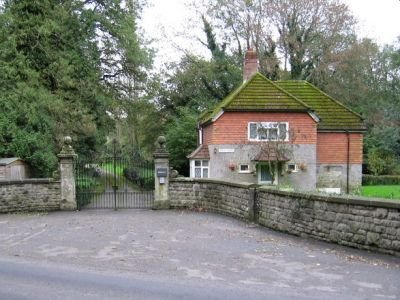
Hurdcott House – West Lodge
Hamlet History
Location
Hurdcott is a hamlet in the parish of Baverstock. There is also a Hurdcott located near Winterbourne Earls, Wiltshire.
Buildings and Land
Land Taxes
Appointment of Select Commissioners for Land and Assessed Taxes 1842
Properties for Sale
Crime and Legal Matters
Animal Related Crime
Rewards
Stolen Lamb 1825 Stolen Sheep 1836 Missing Animals 1867 & 1871
Court Officials
Prisons and Prisoners
Theft
Vandalism
Damaging a Hedge 1856 Stealing a Rail 1867
Education
Laying of Foundation Stone for School at Barford 1853
Employment and Business
Pitched Market Proposal 1847 Harvest Home 1861
People and Parish Notables
Burgesses
Burgess for Borough of Downton 1827
Exhibitions
Family Notices
Fetes
High Sheriffs
High Sheriffs for Wiltshire 1758-1856 Nomination of Sheriffs 1815
Inquest Reports
Wedding Reports
Rev. George F. S. Powell & Miss Everilda Law 1852 Wedding Festivities 1868 Rev. Canon Whitefoord & Mrs. Powell 1890
Associations, Clubs, Organisations & Societies
Agriculture
Salisbury & South Wilts Society for the Protection of Agriculture 1844 South Wilts Anti-League Association 1844 South Wilts & Warminster Farmers’ Club 1844
Friendly Societies
Wiltshire Friendly Society Membership 1827-1871
Horticulture
Prizes Awarded at Salisbury & Wilts Horticultural Society 1845
Sport
Hunting
Hunting Meets 1830-1890 South Wilts Hunt Meeting – Letter to Editor 1871
Family Research
Powell Family
Powell of Hurdcott House Lineage
Weddings
Rev. Canon Whitefoord and Mrs. Powell 1890
Probate
Inquisitions Post Mortem of Lands Held
Bartholomew & Margaret de Badelesmere 1311 Roger Martyn 1629
War, Conflict and Military Matters
Wilton Volunteer Rifle Corps 1859
Hurdcott Camp
At the outbreak of World War I there became an urgent need to accommodate the increasing requirements for Military Training & Transit camps. Towards the end of 1914, John Combes, of East Farm at Fovant, was informed that part of his land was to be requisitioned for one such camp. Subsequently, land to the east and west of his farm was also commandeered and an area stretching from Compton Chamberlayne to Sutton Mandeville became one vast Military Camp. A single track railway connected the camps to the main line.
The camp located at Compton Chamberlayne became known as Hurdcott Camp as it was on land that was part of two farms – Hurdcott and Naish’s. In March 1916, this section of the camp was taken over by the Australian Imperial Forces and became their No. 3 Command Depot.
Hurdcott Army Camp Sale of Dismantled Hutting – No. 5 Camp 1920
Casualties
Herbert Edward Webb, A.I.F. 1918
Maps
Map showing Army Camps at Fovant, Compton Chamberlayne & Hurdcott During WWI
Poetry
Soldiers
Letters Home from Cpl. Thomas James Quinn 1917 & 1918
Australian Contingent
Central Queenslanders Contact 1918 Western Australians in Camp 1918
Henri – Little French Orphan
Henri was a young French orphan who attached himself to a succession of different British Regiments before finding himself with the 4 Squadron, Australian Flying Corps on Christmas Day, 1918. Henri was smuggled into England via a bag marked Oats & was adopted by the squadron as their mascot & became known as “Digger”. Air Mechanic Tim Tovell took on the role of guardian & when the Squadron was being demobilised back to Australia, Henri was again hidden & arrived in Australia with his guardian in 1919. Henri stayed with Tovell in Queensland & later moved to Melbourne so he could become a mechanic with the Royal Australian Air Force. Henri was killed in a road accident in 1928 at the age of 21. Henri – The French Orphan
Acknowledgements
Grateful thanks to previous OPC John Lane for his contribution to this page