Wiltshire and the Royal Navy
Despite Wiltshire being a land-locked county, many Wiltshire men and women served in the Royal Navy. Naval service would probably not have been a first choice peacetime occupation because the nearest ports were Bristol, Avonmouth, Gloucester and, further afield, Portsmouth, Southampton & Plymouth. The only local sailing or water based work available would have been as bargemen on the canals and rivers such as the Kennet and Avon.
Nevertheless, as well as serving in the Royal Navy itself, we have identified many people associated with Wiltshire, who served in the Royal Marine Artillery, Royal Marine Band, Royal Marine Light Infantry, Royal Marines, Royal Naval Reserve, Royal Naval Volunteer Reserve, Women’s Royal Naval Service and the Commonwealth naval services.
Research shows that many Wiltshire men were present at some of the biggest naval battles in British history, including the Battle of Trafalgar (1805) and the Battle of Jutland (1916).
Wiltshire men also served in Royal Navy ships escorting Merchant Navy convoys to the UK and other Allied countries in the Second World War, including Arctic convoys delivering supplies to Russia (see link to Arctic Convoy article below).
After the Second World War, there was a Royal Navy training establishment at Corsham. HMS Arthur, which had previously been located (and closed in 1946) at Ingoldmells in Lincolnshire, was recommissioned in January 1947 at Westell Road, Corsham. Initially used for inducting seamen for National Service, it was later used for leadership training of Naval Petty Officers. The final personnel left in 1993. The site was redeveloped as a retirement home complex in 2014.
Thus far, we have identified four ships and two submarines of the Royal Navy which have been named after places in the county of Wiltshire:
| H.M.S. Fittleton | Unfortunately, this minesweeper was involved in an accidental collision and sank on exercise in the North Sea on 20 September 1976, with the loss of 12 men. A memorial plaque was dedicated to the men in All Saints Church, Fittleton in 2023. |
| H.M.S. Salisbury | This aircraft detection frigate served through the 1960s and 1970s, before becoming a training ship in 1980. She was sunk as a target ship in 1985. Note: there are other ships of the Royal Navy that have been named after Salisbury. These will be added here during 2026. |
| H.M.S. Stonehenge | This destroyer was commissioned in 1919 and initially supported the Allied intervention in the Russian Civil War. It was based at Constantinople in 1920 and assisted in the partitioning of the Ottoman Empire. On 31` October 1920, in poor visibility, it ran aground off the coast of Izmir (formerly known as Smyrna) while on a routine mission. It could not be refloated and was abandoned in November. No-one died in the accident and the remains of H.M.S. Stonehenge were sold in 1921. |
| H.M.S. Wilton | A coastal minesweeper/minehunter, she served through the 1970s and 1980s before being retired in 1994. She was eventually sold in 2001, and was fitted out as the new home of the Essex Yacht Club at Leigh-on-Sea. |
| H.M. Submarine Stonehenge | Launched on 23 March 1943, her initial patrol was off Norway. Then, in the Far East, she conducted two war patrols sinking two Japanese ships, a merchantman and a minesweeper. On 25 February 1944, Stonehenge left the port of Trincomalee, Ceylon (now Sri Lanka) to patrol north of the Strait of Malacca and off the Nicobar Islands in the Indian Ocean. She never returned from her patrol and was declared overdue on 20 March 1944 with the loss of all 49 hands on board. She may have hit a mine or was possibly involved in an accident. Her wreck has never been found. We have not identified any men associated with Wiltshire serving aboard H.M. Submarine Stonehenge. |
| H.M. Submarine P222 (Swindon) | In December 1941, the town of Swindon raised approximately £630,000 during a national savings campaign known as “Warship Week”. To honour this achievement, the Admiralty presented the borough with a commemorative plaque from H.M. Submarine P222 (the current location of this plaque is unknown). H.M. Submarine P222 was commissioned in May 1942 and served primarily in the Mediterranean. Sadly, it was lost with all 47 hands after it was reportedly sunk by the Italian torpedo boat Fortunale on 12 December 1942. P222 was never officially named “Swindon” but is considered to have been “adopted” by the town. The Swindon branch of the Royal Naval Association held periodic services to remember the crew, but these appear to have ceased with the closure of that branch. There is a reference to men from Wiltshire (Swindon, in particular) having served on P222 but to date we have not identified anyone. |
Information related to Wiltshire and the Royal Navy
The following documents have been transcribed and contributed by our members:
| WWI Volunteers by Parish (Wiltshire Telegraph), 1914 | Detailed listing of 1,600+ Wiltshire men who enlisted, as reported by the Wiltshire Telegraph, August – September 1914. The list includes men enlisting into the Wiltshire Regiment, other Army regiments, The Royal Wiltshire Yeomanry and some into the Royal Navy. |
| Navy Probate Index 1708-1775 | A list of 19 men from Salisbury, with some details, whose probate records indicate they were serving on ships. (Obtained from the WSHC). |
| Royal Navy Deserters in Australian Newspapers 1869-1882 | A list of 7 Wiltshire men, with some details, who deserted from Royal Navy ships in Australia. |
Please let us know if you would like to submit any historical information or interesting personal articles about the Royal Navy and Wiltshire.
Royal Navy Memorials
As of June 2025, the WOPC had identified over 800 personnel, associated with Wiltshire, who served and fell whilst serving in one of the naval services, mainly the Royal Navy, mostly during the First and Second World Wars. It is an ongoing project to identify the ships in which they served. These casualties are included in the We Will Remember Them listing described on the Remembrance page.
There are three main Royal Navy memorials in the United Kingdom to the naval casualties of the First and Second World Wars: at Chatham, Plymouth and Portsmouth. The Commonwealth War Graves Commission (CWGC) provides information about the location and background of the memorials together with details of all the fallen, including Wiltshire servicemen, commemorated at each location:
Chatham Naval Memorial | Cemetery Details | CWGC
Plymouth Naval Memorial | Cemetery Details | CWGC
Portsmouth Naval Memorial | Cemetery Details | CWGC
If a member of the Royal Navy with a Wiltshire connection died in service, then any images of their individual grave or memorial (UK or Overseas), that we have received from our members, may be found via the Military Gallery link on the relevant parish page on the website.
Royal Navy Gallery
The link below only holds Royal Navy-related images, received from members, which refer generally to Wiltshire. These may include photographs of the main Royal Navy memorials, county-wide Wiltshire-related Royal Navy memorials, historical photographs, postcards and other artefacts.
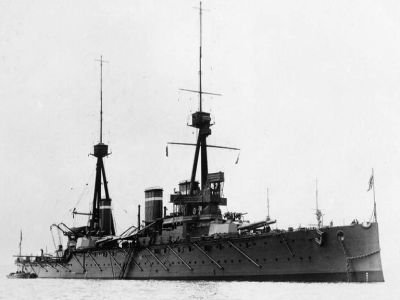
With grateful thanks to the Imperial War Museum for use of the image above of HMS Invincible, which was sunk at the Battle of Jutland, 31 May 1916 with the loss of over 1,000 Royal Navy personnel, including 25 men from Wiltshire.
Royal Navy – Useful Links
| Royal Navy Service Records | The Imperial War Museum (IWM) guide on where to find Royal Navy Service Records |
| Royal Navy Family History Research | The Imperial War Museum (IWM) guide on Tracing your Royal Navy Family History |
| Arctic Convoy Project (wshc.org.uk) | Describes an excellent project by Wiltshire & Swindon History Centre, which gathered oral histories from Wiltshire Naval men serving aboard ships in the Arctic Convoys. |
Wiltshire & The Royal Navy – Related Books
Apart from some naval books referencing Wiltshire regiments travelling by sea on overseas service, we are not aware of any books specifically related to Wiltshire and the Royal Navy. Please let us know if you would like to bring one to our attention.